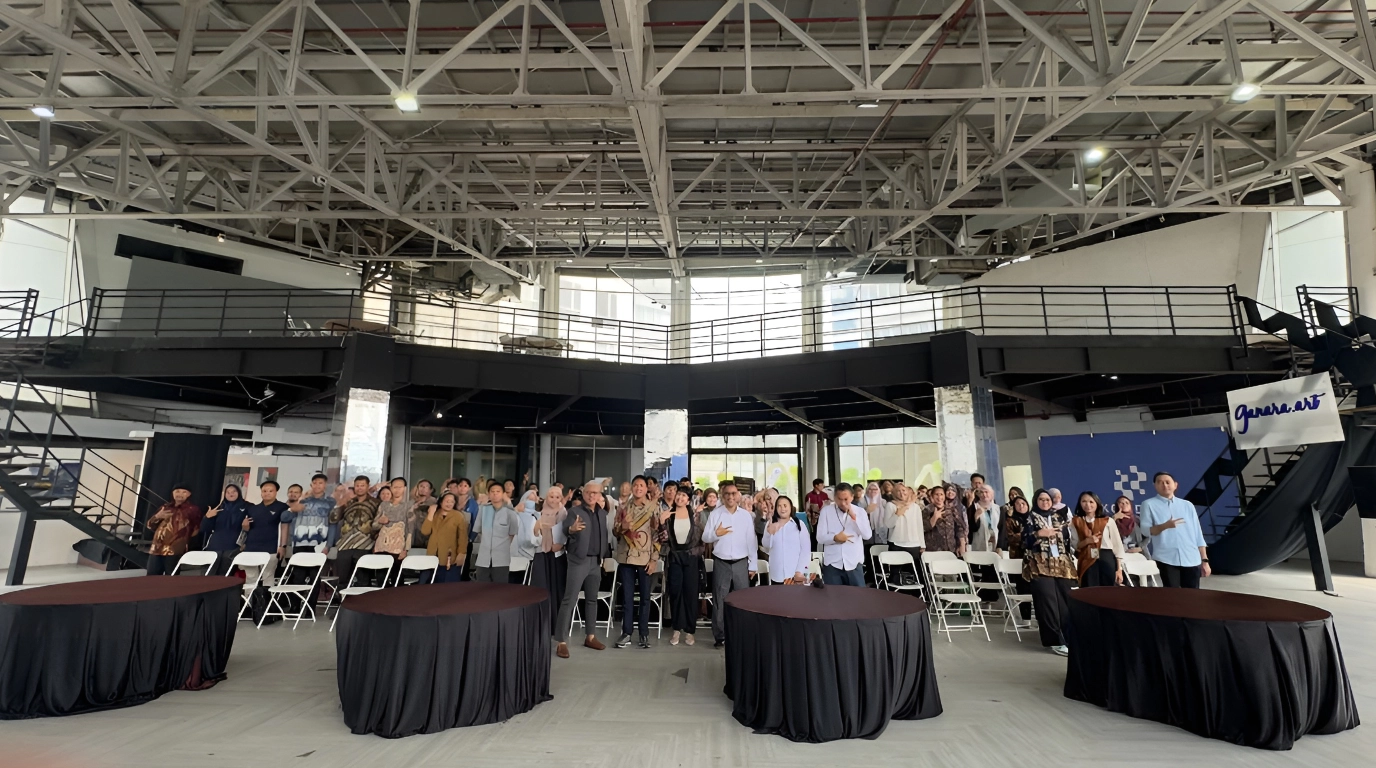
Tuesday morning at fX Sudirman, government public relations practitioners gathered at the Garuda Spark Innovation Hub for a simple-sounding agenda: learning to communicate in an era that no longer waits for press releases.
GSMS 2026 has entered its seventh year. But this year feels different in tone. It’s not about who attends, it’s not about the awards. What is different is the issue that is brought to the surface: that there are media entities that have no offices, no editors, no structure, but have real influence over public trust.
Aqsath Rasyid Naradhipa, CEO of NoLimit Indonesia, calls it homeless media.
“These non-conventional media entities are growing rapidly because they have succeeded in filling the void of viewpoints, especially for the young demographic who tend to prefer decentralized and concise information over traditional news formats,” said Aqsath.
Not an accusation. It is more of an honest acknowledgment of the conditions on the ground that have long existed, but are rarely acknowledged in government forums.
Partnership, Not Competition
What’s interesting about Aqsath’s framing: he doesn’t call homeless media a threat. Quite the opposite. According to him, the government needs to build a healthy partnership pattern with the modern media ecosystem so that public discourse becomes richer, not more polarized.
Karina Kusumawardani, GSMS Board of Trustees, comes with a more operational perspective. Government agencies need to be agile, he said. Press releases, dynamic social media content, face-to-face socialization, everything must happen simultaneously, not alternately.
“This communication innovation is crucial for creating an adaptive response and increasing community involvement organically,” said Karina.
That sounds like a big demand. But data from this year’s GSM Award proves that there are agencies that have succeeded in doing so.
16 Names, One Method
The 2026 GSM Award announced 16 winners from four clusters: ministries, institutions, provincial governments and state universities. Four categories: Most Engaging, Best Use of Image, Best Use of Video, and Best Account.
There is no registration form. There is no lobbying process. The winner is determined from analytical data tracking for a full year, then validated by a panel of professional judges.
Some names that stand out: Ministry of Social Affairs in Most Engaging ministries. Indonesian Police in institutional clusters. ITB for PTN. But the name that was most consistent that afternoon was DI Yogyakarta, which swept all categories in the provincial government cluster: Most Engaging, Best Use of Image, Best Use of Video, as well as Best Account.
Category winner Best Account:
- Ministry: Ministry of Higher Education, Science and Technology
- PTN Cluster: UGM
- State Institutions: DPR RI
BP2MI won Best Use of Image. KPK won Best Use of Video. Udayana University and Semarang State University each won awards in the visual category.
GSMS itself was organized by Awrago and NoLimit Indonesia, two names that have been holding this forum since 2019, with the support of Iprahumas who participated again this year.
One thing is clear from the winner’s data: consistency trumps virality. DI Yogyakarta didn’t win because of one piece of content that exploded. They won on all fronts, all year long.
PakarPBN
A Private Blog Network (PBN) is a collection of websites that are controlled by a single individual or organization and used primarily to build backlinks to a “money site” in order to influence its ranking in search engines such as Google. The core idea behind a PBN is based on the importance of backlinks in Google’s ranking algorithm. Since Google views backlinks as signals of authority and trust, some website owners attempt to artificially create these signals through a controlled network of sites.
In a typical PBN setup, the owner acquires expired or aged domains that already have existing authority, backlinks, and history. These domains are rebuilt with new content and hosted separately, often using different IP addresses, hosting providers, themes, and ownership details to make them appear unrelated. Within the content published on these sites, links are strategically placed that point to the main website the owner wants to rank higher. By doing this, the owner attempts to pass link equity (also known as “link juice”) from the PBN sites to the target website.
The purpose of a PBN is to give the impression that the target website is naturally earning links from multiple independent sources. If done effectively, this can temporarily improve keyword rankings, increase organic visibility, and drive more traffic from search results.